How to Buy Base Power Stock in 2026

Base Power is building a new residential power model.
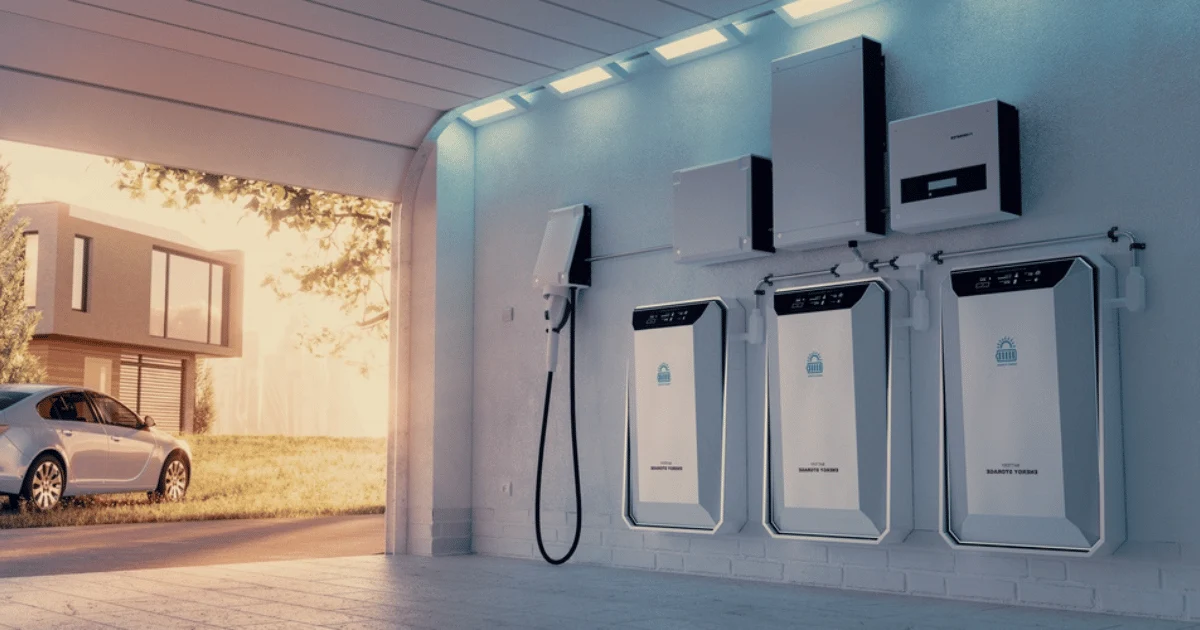
Its home battery systems connect directly to the grid, enabling Base Power to reduce costs by charging when demand is low and selling surplus electricity during peak periods. The systems also supply backup power during outages.
This technology is especially useful in states like Texas (in which Base Power is headquartered), where electricity prices can fluctuate significantly based on demand.
Customers typically pay a few hundred dollars for installation, followed by a monthly membership fee ranging from $19 to $29 for ongoing service and maintenance.
In return, Base Power guarantees customers will pay below-market rates for their electricity.
As concerns around grid reliability and energy volatility grow — and as AI data centers and electric vehicles place increasing strain on existing power infrastructure — Base Power has emerged as a practical solution for homeowners.
Founded just three years ago, the company is growing quickly. After generating roughly $12 million in revenue in 2025, Base Power is projecting $70 million in 2026.
Unsurprisingly, investors are paying attention. In October 2025, the company raised a $1 billion funding round at a $4 billion post-money valuation, its highest to date.
And while Base Power is still a private company, there may be a way for you to invest in it, too.
Can you buy Base Power stock?
Base Power is not publicly traded, which means there's no Base Power stock symbol and no way for retail investors to buy its shares directly.
However, if you qualify as an accredited investor, you can buy its shares on Hiive.
Accreditation requirements
It's easy to see if you qualify as an accredited investor. You only need to meet one of the following criteria:
- Have an annual income of $200,000 individually or $300,000 jointly.
- Have a net worth that exceeds $1,000,000 (excluding your main residence).
- Be a qualifying financial professional (have a Series 7, 65, or 82 license).
If any of these apply, you qualify. Just register with the platform below, and Hiive will verify your status.
Hiive is an investment marketplace where accredited investors can buy shares of privately held, venture-backed companies. There are more than 3,000 pre-IPO companies listed on the platform, including Base Power:
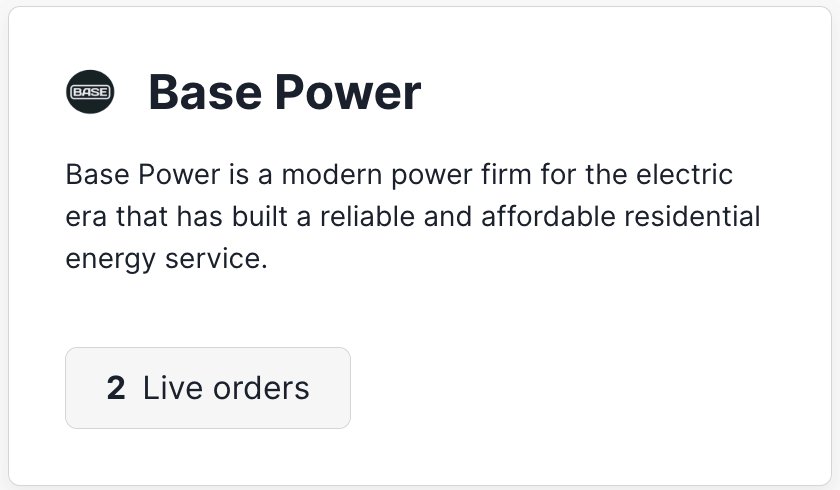
There are two order blocks of Base Power stock available at the time of writing.
Each of these blocks was created by a unique seller, who is typically an employee, angel investor, or VC firm.
Once a seller creates their listing, buyers can see their asking price and the quantity of shares available. They can accept the seller's asking price as listed or place bids on the shares.
After a buyer and seller agree on a price, Hiive's team steps in to facilitate the transaction.
To see the full order book — all bids, asks, implied valuations, and recent transactions — for Base Power and every other company listed on Hiive, create an account with the button below:
Can retail investors buy Base Power stock?
Since Base Power is a private company and Hiive is only for accredited investors, there's no way for retail investors to buy shares of its stock.
That said, investors can still gain indirect exposure to many of the same trends driving Base Power's growth, such as rising grid volatility, increasing electricity demand from AI data centers and electric vehicles, and distributed energy and home resilience.
Tesla
While best known for its electric vehicles, Tesla (TSLA) also operates a large energy generation and storage business through products like Powerwall, Megapack, and its solar offerings.
At a high level, Tesla and Base Power are solving the same problem: using home energy storage to lower costs, manage peak demand, and improve reliability. But the execution is different.
Tesla follows an ownership model. Homeowners typically buy a Powerwall outright, often alongside solar panels, with total costs that can reach $15,000 or more before incentives.
In return, the homeowner controls the system and can sell excess power back to the grid, capturing the upside directly.
Base Power takes a service-based approach. Instead of a large upfront purchase, customers pay a much smaller installation fee, followed by a monthly subscription and a long-term contract.
Base Power handles grid interactions* and guarantees below-market electricity rates, trading potential upside for simplicity and predictability.
*Base Power likely makes most of its money through its “grid-balancing” operations.
Base Power's units are also about double the capacity of Tesla's.
Other options
Beyond Tesla, several public companies offer partial exposure to the same forces driving Base Power's growth.
Residential energy hardware providers like Enphase Energy (ENPH) and SolarEdge Technologies (SEDG) sell equipment that enables homeowners to generate and store electricity themselves.
Homeowners can buy the equipment up front and pay a solar contractor to install it.
Investors can also look at more direct grid players like Vistra (VST), which owns generation and battery storage assets that benefit from electricity price volatility and operates heavily in Texas.
NextEra Energy (NEE) is also a large player in renewables, energy storage, and grid modernization.
Section note: None of these companies perfectly replicate Base Power's business. But for retail investors, they offer accessible ways to invest in the same structural forces shaping the future of residential power while Base Power remains private.
When will Base Power IPO?
Base Power has not publicly indicated plans for an initial public offering. That said, now that the company has reached a Series C, an IPO is the most likely long-term outcome.
As of last July, Base Power was on pace to generate $12 million in revenue in 2025 and projected that figure would jump to $70 million in 2026.
Much of that growth has been driven by partnerships with large homebuilders, who agree to install Base Power's batteries in new housing developments.
The company is also targeting data centers, which are massive facilities that power artificial intelligence workloads. Base Power is in discussions with several cloud providers about supplying energy storage through its battery systems.
If the company gains meaningful traction across home construction and data centers, revenue could accelerate quickly, and an IPO could come shortly thereafter.
When Base Power does go public, you'll be able to buy shares through a brokerage account. If you don't have a brokerage account, we recommend Public.
Who founded Base Power?
Base Power was co-founded in 2023 by Zach Dell and Justin Lopas.
Dell, who serves as CEO, is a former employee at VC firm Thrive Capital and the son of billionaire PC mogul Michael Dell (Dell Technologies, DELL).
Lopas, the COO, worked as a manufacturing engineer at SpaceX and then Anduril Industries before leaving to start Base Power.
The pair launched Base Power to provide homeowners with a way to access spare and backup electricity more cheaply and reliably. But that's just the start.
Base sees its distributed battery storage as a way to fix the existing grid. Dell has described the U.S. power grid as “broken” and likely to be strained even further due to population growth and the electrification of the economy.
Rather than relying on slow, capital-intensive grid upgrades, Base Power's approach is to deploy large batteries directly to homes, creating a distributed energy network that can be built faster, with fewer regulatory hurdles, and at a lower cost.
Leasing is central to the model. It lowers the up-front cost for homeowners, while allowing Base Power to control how the batteries are used.
Although more capital-intensive, the model puts Base in charge of the “grid-balancing operations” of all its batteries, storing extra capacity when prices are low and selling electricity back to the grid when demand spikes.
What it makes from these operations likely drives the majority of its revenue.
That makes Base Power less of a consumer hardware company and more of a modern utility.
In Texas' deregulated electricity market, providers are rewarded for delivering power quickly during periods of peak demand, a role that distributed home batteries are well-suited to fill.
As Base Power expands into more neighborhoods, thousands of leased batteries effectively operate as a single, flexible grid-scale asset, with the bulk of the economic upside accruing to the company.
With the proceeds from its Series C, Base Power plans to build a second battery factory in the U.S., in addition to the facility it is currently constructing near Austin, Texas, and to expand operations beyond Texas.
What is Base Power's valuation?
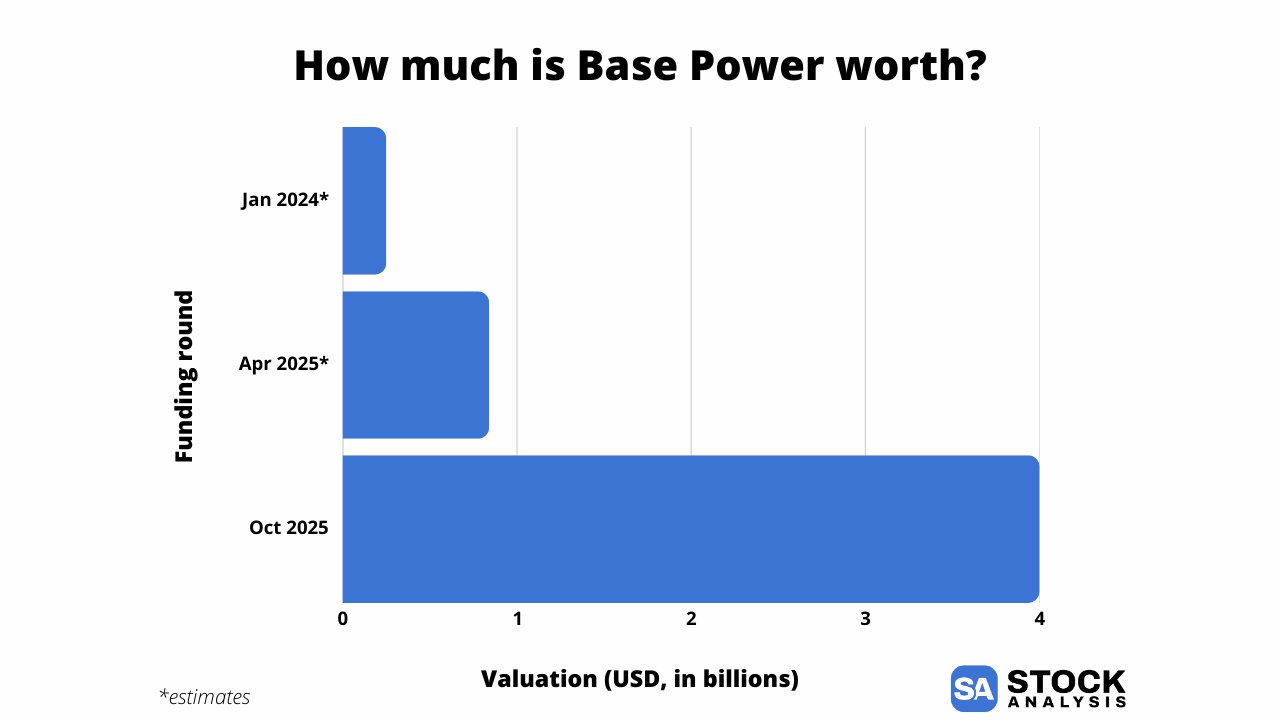
In October 2025, Base Power raised $1 billion in its Series C at a post-money valuation of $4 billion, bringing total funding to $1.28 billion.
Before that, the company raised $200 million in its Series B in April 2025 and $68 million in its Series A in January 2024.
Neither round disclosed a valuation, but based on typical step-ups and the size of the rounds, I estimate those rounds valued the company at roughly $850 million and $250 million, respectively.
Using these estimates, here's a look at how Base Power's valuation has changed since being founded:
Any views expressed here do not necessarily reflect the views of Hiive Markets Limited ("Hiive") or any of its affiliates. Stock Analysis is not a broker-dealer or investment adviser. This communication is for informational purposes only and is not a recommendation, solicitation, or research report relating to any investment strategy, security, or digital asset. All investments involve risk, including the potential loss of principal, and past performance does not guarantee future results. Additionally, there is no guarantee that any statements or opinions provided herein will prove to be correct. Stock Analysis may be compensated for user activity resulting from readers clicking on Hiive affiliate links. Hiive is a registered broker-dealer and a member of FINRA / SIPC. Find Hiive on BrokerCheck.